What Makes a Kitchen Feel Expensive (Even When It Isn’t)

DARLINGHURST - KAIKO DESIGN INTERIORS & STYLING
Walk into some kitchens and they immediately feel elevated.
The space feels calm, intentional and composed. Surfaces catch the light in subtle ways. Materials feel balanced rather than busy. Even simple kitchens can carry a sense of quiet luxury.
Interestingly, that feeling rarely comes from price alone.
Professional designers know that the perception of quality often comes from composition rather than cost. A kitchen that feels refined usually follows a few underlying design principles. When these principles are present, even modest kitchen upgradescan transform the atmosphere of the space.
Expensive Kitchens Feel Calm, Not Busy
One of the strongest signals of a refined kitchen is visual calm.
Many kitchens become cluttered with too many competing elements: multiple finishes, heavy hardware, decorative backsplashes and contrasting materials. The result is visual noise.
Expensive looking kitchens tend to do the opposite. They simplify.
Cabinetry lines feel clean. Materials are limited to a small palette. Surfaces are allowed to breathe. This restraint is a hallmark of thoughtful kitchen design, where each element supports the overall composition rather than competing for attention.
Designer insight:
Luxury in design often comes from restraint rather than decoration.
The Eye Knows Where to Look
Another defining characteristic of refined kitchens is a clear focal point.
In many ordinary kitchens, the eye has nowhere to land. Everything is visually equal. In contrast, a well designed kitchen often guides attention toward a single feature: an island, a range, a stone surface or a lighting installation.
This approach is central to good kitchen layout design, where spatial hierarchy gives the room structure.
When the eye understands where to look first, the entire kitchen feels more deliberate.

PORT STEPHENS HOUSE - KAIKO DESIGN INTERIORS & STYLING
Texture Creates Depth
Expensive interiors almost always contain depth.
Rather than relying on a single flat surface, designers layer materials with subtle differences in texture. Timber might soften stone surfaces. Matte cabinetry may sit alongside brushed metal or veined marble.
This layering allows the kitchen to feel rich without appearing busy.
In many cases, this principle is more powerful than expensive materials themselves. Even simple surfaces can feel elevated when texture is thoughtfully balanced across the room.
Designer insight: Texture creates richness long before luxury materials enter the conversation.
Lighting Shapes the Experience
Lighting is one of the most underestimated elements in kitchen design.
Many kitchens rely on rows of ceiling downlights, which provide brightness but very little atmosphere. In contrast, kitchens that feel elevated almost always feature a layered kitchen lighting design.
Pendant lights over the island introduce sculptural interest. Under cabinet lighting reveals texture in the benchtops and splashback. Soft wall lighting adds warmth during the evening.
Together, these layers allow the kitchen to transition from a functional workspace during the day to a welcoming social space at night.
Good Kitchens Hide the Practical Stuff
Another subtle signal of a refined kitchen is the absence of visual clutter.
Expensive kitchens tend to conceal everyday elements. Appliances integrate into cabinetry. Storage absorbs smaller objects. Work surfaces remain open and calm.
This does not necessarily require a full renovation. Thoughtful kitchen renovation ideasoften focus on improving storage and organisation rather than replacing materials.
Designer insight: The less visual noise a space contains, the more intentional it feels.
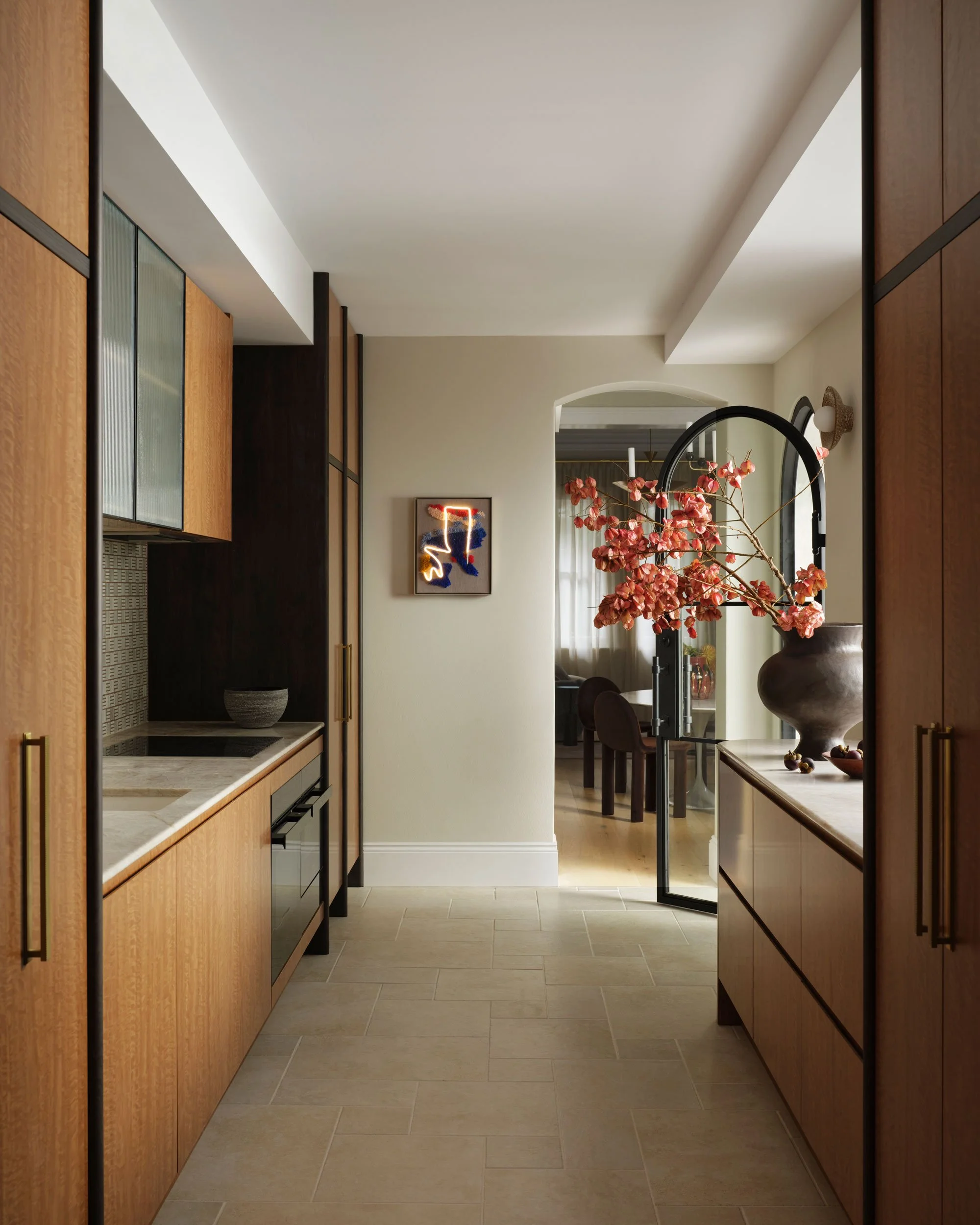
CHIPPENDALE TERRACE HOUSE - KAIKO DESIGN INTERIORS & STYLING
Colour Feels Balanced
Colour also plays an important role in how expensive a kitchen appears.
Rather than dramatic contrasts, many refined kitchens use tonal variation within a limited palette. Warm neutrals, mineral greens or muted greys create depth while maintaining cohesion.
This approach allows surfaces such as timber, stone and metal to contribute visual richness without overwhelming the space.
Many modern kitchen design projects use colour this way, creating kitchens that feel grounded and architectural rather than decorative.
Small Details Create the Biggest Shift
Finally, the details that often define luxury kitchens are the ones people barely notice.
The alignment of cabinetry lines. The scale of handles. The way a benchtop meets a wall. The softness of lighting across a surface.
These small moments collectively shape how the kitchen is perceived.
Designer insight: Luxury is rarely a single feature. It is the accumulation of thoughtful decisions.
When design thinking guides these decisions, even simple kitchen upgrades can dramatically change how a space feels.
Designing Kitchens That Feel Elevated
A kitchen does not need to be extravagant to feel refined. What matters more is clarity, balance and thoughtful composition.
Through careful kitchen design, balanced materials and considered lighting, even modest renovations can produce kitchens that feel calm, timeless and quietly luxurious.
At Kaiko Design Interiors, our approach to Sydney kitchen renovations focuses on spatial flow, material harmony and atmosphere rather than excess.
If you are exploring ideas for kitchen upgrades or planning a renovation, booking a discovery call with our team is the best place to start. The most impactful design decisions often happen at the very beginning of the process.