Lighting Design Explained: How Lighting Shapes Mood, Function and Flow

HILL HOUSE - KAIKO DESIGN INTERIORS & STYLING
Walk into a beautifully designed spaceand something happens before you even understand why.
The room feels calm. Or dramatic. Or quietly inviting.
You may notice the furniture, the artwork or the colour palette, but the atmosphere was already there the moment you entered. More often than not, that atmosphere is created by lighting design.
Light is not simply about making a space visible. It shapes perception. It determines where the eye travels, how materials reveal themselves and whether a room feels energetic or restful.
In other words, lighting quietly choreographs the entire experience of a home.
Lighting Shapes Mood
One of the most powerful roles of lighting is emotional.
Warm lighting softens a room and encourages relaxation. It’s the reason restaurants dim their lights in the evening and why living rooms feel more comfortable with warm toned lamps rather than bright overhead lighting.
Cooler light has the opposite effect. It feels sharper and more energising, making it ideal for kitchens, bathrooms and workspaces where clarity matters.
Designers often balance multiple layers of light to control atmosphere throughout the day. By combining task,ambient and accent lighting, a space can shift easily from bright morning functionality to calm evening ambience.
Lighting becomes less about brightness and more about feeling.
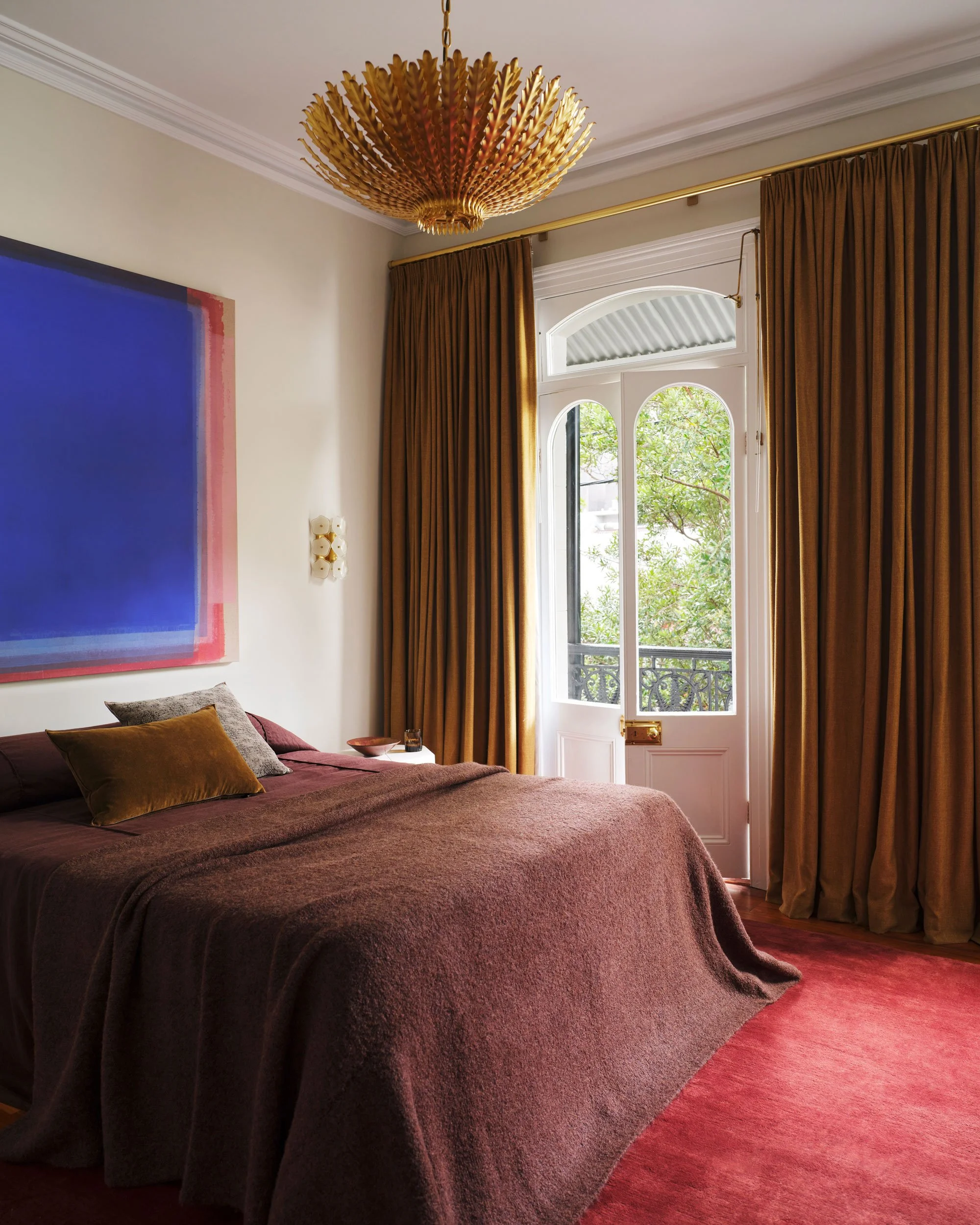
CHIPPENDALE TERRACE HOUSE - KAIKO DESIGN INTERIORS & STYLING
Lighting Supports Function
Beyond atmosphere, lighting also determines how well a space works.
Every room has different practical needs. Kitchens require focused light over preparation areas. Bathrooms need clarity around mirrors. Living rooms benefit from softer lighting that allows the space to transition between entertaining, reading and relaxing.
Thoughtful lighting ensures that beauty and practicality work together. It reflects the broader design principle of merging function and beauty in interior design, where aesthetics never compromise how a space performs.
When lighting is positioned carefully, everyday activities feel easier and more intuitive.
Lighting Creates Flow
Lighting also plays a subtle role in how we move through a home.
A softly illuminated hallway encourages movement from one room to the next. Accent lighting placed on artwork or textured walls creates small moments of pause. A pendant suspended above a dining table naturally draws people toward the centre of the room.
These subtle cues help guide the eye and establish rhythm between spaces.
Without them, interiors can feel flat or disconnected. With them, a home develops a natural sense of flow.
Task, Ambient and Accent Lighting Defined
The three-layer framework is the working vocabulary of lighting design, and the distinction between the layers is functional rather than technical. Each answers a different question about what the light is for.
Ambient lighting is the base layer, the general illumination that makes a room usable when you walk into it. In most Australian homes this defaults to ceiling downlights, which is where a great deal of lighting goes wrong: a grid of downlights delivers even light and almost no atmosphere. Better ambient sources spread light across surfaces rather than pointing it at the floor. Wall washers, a central pendant with a diffusing shade, floor lamps with translucent shades, and cove or perimeter lighting all raise the overall light level while giving the eye something softer to read. Ambient light should be dimmable as a matter of course, because the level a kitchen needs at seven in the morning is not the level it needs at nine at night.
Task lighting is directed at a specific activity, positioned so that the light falls on the work rather than on the person doing it. The common failure is a single ceiling fitting behind the user, which puts their own shadow across the bench or the page. Kitchens want under-cabinet strip lighting across preparation zones and focused pendants over an island. Bathrooms want vertical light at the mirror, sconces either side at face height rather than a downlight overhead, which casts shadows into the eye sockets and under the chin. Reading positions want an adjustable floor or table lamp with the shade at roughly shoulder height when seated. Desks want an articulated task lamp entering from the side opposite the writing hand.
Accent lighting is the smallest layer by volume and the one that does the most for how a room feels. Its purpose is emphasis: making the eye stop somewhere deliberate. Picture lights and adjustable ceiling spots on artwork, uplights grazing a textured wall or a stone fireplace, strip lighting inside glazed joinery, a spot on a plant to throw shadow onto a wall. The convention worth knowing is that accent light wants to sit noticeably brighter than the ambient level around it, roughly three times as bright, or the emphasis reads as an accident rather than a decision.
A room needs all three, and the layers should be separately switched and separately dimmed. That single control decision is what allows one space to work as a bright working kitchen in the morning and a low, warm room in the evening. Where the layers share a circuit, the flexibility disappears no matter how good the fittings are.
Natural Light Sets the Foundation
Artificial lighting may be carefully designed, but natural light remains one of the most influential elements in any interior.
Sunlight shifts throughout the day, constantly changing the atmosphere of a room. Morning light tends to feel crisp and energising, while afternoon light softens colours and deepens shadows.
Designers often begin by understanding how daylight enters a space. Window placement, reflective surfaces and thoughtful layouts can all help guide natural light deeper into the home.
When daylight works alongside artificial sources, designers begin creating ambiance with strategic lighting choices that feel balanced and effortless.
Layering Light Brings Depth
One of the most important principles in lighting design is layering.
A room illuminated by a single ceiling light can feel flat and one dimensional. Introducing multiple light sources creates depth and flexibility.
Floor lamps can warm a seating area. Pendant lights can define a dining zone. Wall sconces can highlight architectural features or create rhythm along a corridor.
These layered approaches reflect some of the most reliable effective lighting techniques for interiors, allowing the atmosphere of a room to evolve throughout the day.
Lighting as a Design Element
Lighting can also become one of the most striking features in a room.
A sculptural pendant above a dining table can act almost like artwork. A row of wall lights can introduce rhythm along a hallway. A dramatic floor lamp can transform an empty corner into a reading retreat.
The material and finish of a fixture influence how light interacts with surrounding surfaces. Matte finishes soften reflections, while metallic surfaces bounce light across nearby textures.
A well-chosen fixture can therefore function both as illumination and as a defining design feature within the interior.

HILL HOUSE - KAIKO DESIGN INTERIORS & STYLING
Bringing Mood, Function and Flow Together
The most memorable interiors rarely treat lighting as an afterthought.
Instead, lighting is considered from the beginning of the design process. Designers think carefully about how light shapes atmosphere, supports everyday activities and guides movement throughout the home.
When these elements are balanced correctly, lighting becomes the thread that ties the entire interior together.
Explore Lighting Design With Kaiko Design Interiors
If you are planning a renovation or a new home and want the lighting resolved properly rather than left to a downlight grid, at Kaiko Design we develop lighting layouts, fitting schedules and switching plans as part of our documentation. Our residential interior design work treats the lighting plan as a structural decision, not a finishing one. Get in touch to arrange a discovery call and discuss your project.
Thoughtful lighting design is often the difference between a room that simply looks good and one that truly feels exceptional to live in.