Sydney Interior Design Cost Guide 2025/26
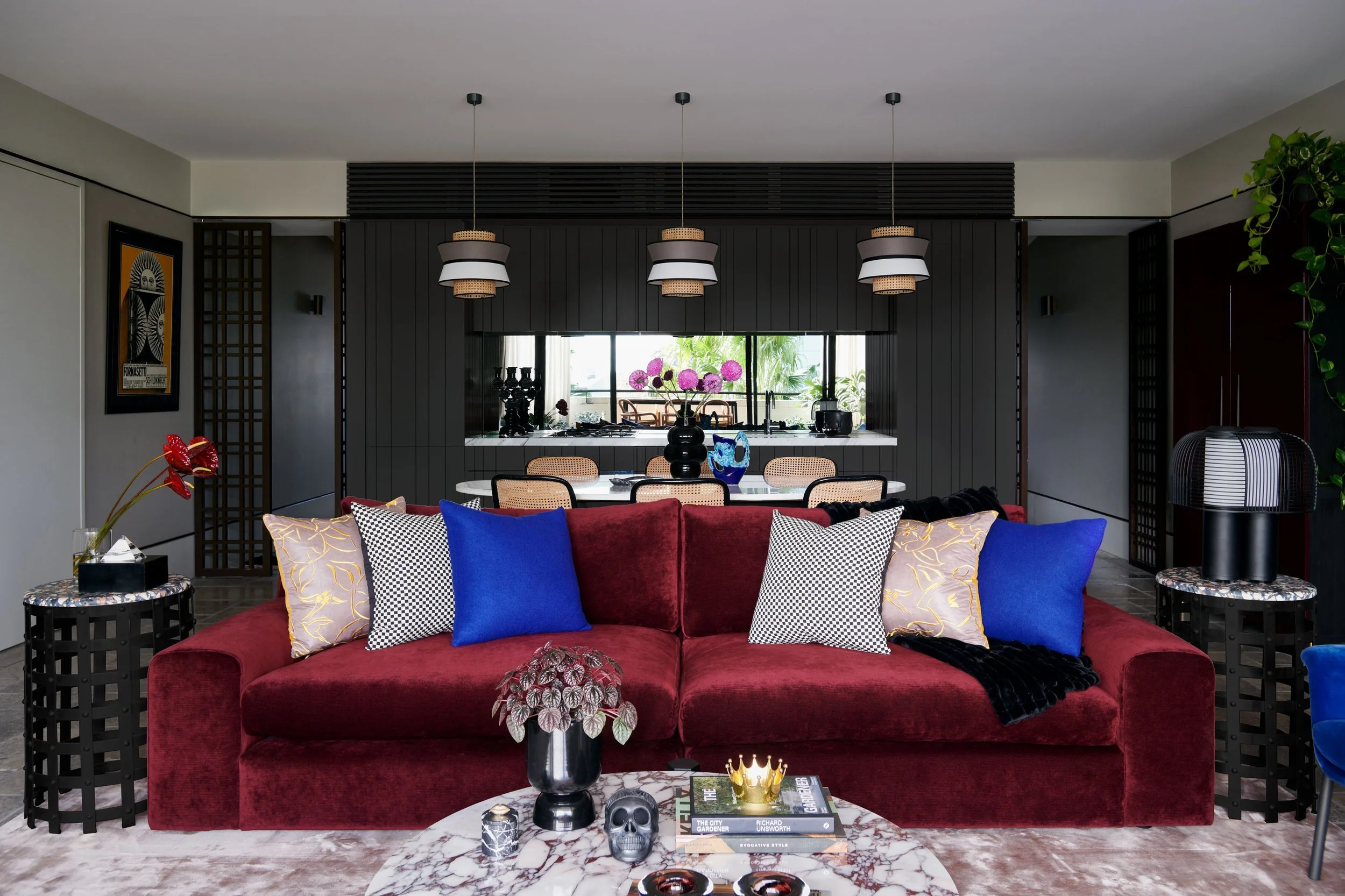
SURRY HILLS HOME - RESIDENTIAL INTERIOR DESIGN AND DECORATION
When a prospective client asks how much an interior designer costs in Sydney, they're rarely asking about fee structures in the abstract. They want to know: can I afford this? Will it be worth it? What am I actually getting?
This guide answers those questions with real numbers and honest context. We've covered fee models, what drives costs up and down, what's typically included and excluded and how to think about your total project budget — not just the design fee.
At Kaiko Design Interiors, we work on full-service residential projects across Sydney: terraces, freestanding homes and apartments, most of them substantial renovations or new builds where design fees are a five-figure commitment. We've seen what happens when costs aren't understood upfront. It rarely ends well. Clarity at the start protects the project, the relationship and the outcome, which is why this guide covers the whole market and not just our corner of it.
What an Interior Designer in Sydney Actually Costs
Cost varies — significantly — by experience level, scope, and fee model. Below are current market benchmarks for 2025/26.
Hourly rates Senior and principal designers in Sydney typically charge $250 – $400 ex GST per hour. Associate and junior level designers generally sit at $150 – $250. Hourly billing works for targeted advice or small-scope decisions. For larger projects, it creates cost uncertainty unless the scope is tightly defined.
Fixed-fee packages Full-service design for a two to three bedroom apartment, from concept through documentation to procurement management, typically ranges from $15,000 to $35,000 in fees. For a full-house renovation or a multi-storey terrace with custom joinery throughout, design fees of $30,000 to $60,000 and beyond are not unusual. At the other end of the market, a single-room furnishing and styling engagement (concept, product curation, procurement) typically runs $3,000 to $8,000 in design fees, with total spend including furniture from $8,000 to $25,000. That smaller scope is a decorating service rather than interior design, and it is not work Kaiko Design Interiors takes on.
Percentage of project cost For full-service engagements that include documentation and construction coordination, many studios charge 10 – 15% of total project spend.
Total project budgets Design fees are only part of the picture. Here are realistic total investment ranges — design, construction, finishes and furnishings combined:
Terrace or freestanding home renovation, full: $500,000 and beyond
Terrace or freestanding home renovation, partial: $300,000 and beyond
Apartment renovation (kitchen, bathrooms, joinery): $200,000 and beyond
Apartment refresh (no structural work): from $100,000
Design fees typically represent 10 – 20% of total spend. The more complex the project — more trades, more documentation, more custom work — the higher that proportion.
For a more detailed breakdown by project type, our companion article on interior design costs in Sydney covers this in further depth.
The four fee models — and what suits each project
1. Hourly consultation
Best suited to early direction, a specific decision, or reviewing a builder's proposal. Rates are as described above. The limitation: without a defined scope, hours can accumulate quickly. Anyone offering open-ended hourly billing on a full renovation should be pressed on what the cap looks like.
2. Fixed-fee packages
Our preferred model at Kaiko Design Interiors, and the one we've found most beneficial to clients. Deliverables, timeline and total cost are agreed before work begins. There's no ambiguity. If your scope changes materially, the fee is renegotiated — but the starting position is one of certainty.
Our fixed-fee structure covers defined design stages. You can read a full breakdown of each stage — what you receive, when, and at what cost — on our interior design pricing page.
3. Percentage of project cost
Common for large-scale, full-service engagements where the scope isn't fully resolved at the outset. Typically 8 – 15% of total construction and furnishings spend. This model aligns the designer's fee with the scope of the work, which is logical for complex projects — but only if there is complete transparency around what "total spend" includes and how variations are tracked.
4. Procurement and trade margin
When a studio manages sourcing and installation — furniture, lighting, textiles, rugs — a margin is applied to purchases, typically between 15 – 30%. This covers the significant time involved in supplier coordination, order management, lead-time tracking and delivery oversight.
This is frequently misunderstood as a hidden cost. It isn't. It's how procurement is resourced. A reputable studio discloses it upfront and is transparent about trade pricing. In many cases, access to trade discounts offsets part or all of the margin. Our article on procurement, trade pricing and lead times explains the mechanics in detail.
What's included — and what isn't
This is where budgets most commonly go wrong: assuming full-service when only partial-service was agreed, or vice versa.
Full-service residential interior design typically covers:
Concept design — spatial planning, mood direction, material and finish selections, lighting concept
Design development — detailed documentation: joinery drawings, FF&E schedules, colour specifications, lighting plans
Builder and trades documentation — specifications sufficient for tendering and construction
Construction liaison — site visits, progress reviews, variation management
Procurement management — sourcing, ordering, tracking and coordinating delivery and installation of furniture and finishes
A consultation or partial-service engagement may include only one or two of these stages. Understand exactly what your brief covers before anything is signed.
What isn't typically included: structural engineering reports, building approval costs, builder fees, or any of the trades themselves. The designer coordinates; they don't absorb those costs.
For a thorough walkthrough of what each engagement stage involves, what to expect when hiring an interior designer is worth reading before your first studio conversation.

CHIPPENDALE HOME - RESIDENTIAL INTERIOR DESIGN AND DECORATION
What drives cost higher
Documentation depth. The more trades involved, the more detailed the drawings required. Joinery needs precise dimensioned drawings. Complex electrical layouts require coordinated reflected ceiling plans. This work prevents on-site variations — which are almost always more expensive than getting the documentation right upfront.
Materials and finish specification. Natural stone, solid timber, custom cabinetry and artisan lighting each require more intensive specification, longer sourcing lead times, and more careful on-site management than standard alternatives. This is appropriate — these materials perform differently at the detail level and need to be specified with that in mind.
Structural and heritage complexity. Multi-storey terraces, apartment buildings with strata requirements, and properties with heritage overlays all add coordination layers. Heritage overlays are particularly common across Sydney's Inner West and Eastern Suburbs. If you're renovating a period property, factor in additional time for approval processes. Our article on apartment renovations, strata approvals and Sydney by-laws is useful context here.
Custom versus production. Bespoke joinery — a custom wardrobe, a built-in banquette, a kitchen designed to a specific architectural dimension — requires more design time, more detailed documentation, more supplier coordination and longer lead times. The outcome is categorically different to production furniture. So is the process.
How to allocate your budget
A question we hear often: should you agree on a design fee first, then set a construction budget? Or set a total budget and work backwards?
The honest answer is to do both at once.
Design fees are relatively straightforward to project. Construction costs and furniture are far more variable — influenced by materials, supply chain, builder capacity, and how resolved your brief is. Part of the designer's role is to help you understand what your budget can realistically achieve, and where to direct it.
As a working rule: for a renovation with significant construction, expect design fees to sit at 10 – 15% of total spend. For a furnishing and decoration project without construction, that proportion will be higher, because the value is almost entirely in design time and product curation.
The mistake we see most often: clients attempting to minimise the design fee in isolation, without considering how that fee protects the larger investment. A well-resolved, properly documented project costs less to build than an under-specified one. The savings show up in the builder's quote, not just the design invoice.
What a Decorator Costs and Why the Fee Differs
The most common source of confusion in Sydney pricing is the assumption that interior designers and interior decorators are the same service at different price points. They are different services, and the fee gap reflects a difference in scope rather than a difference in quality.
An interior decorator works with the surface of a room: furniture, textiles, colour, art and styling. In Sydney, decorating engagements are commonly billed hourly at $80 to $200 ex GST, or as a room package from around $1,500 to $5,000. Where no construction is involved and the room simply needs resolving, this is often the right and proportionate service to buy.
An interior designer works with the architecture: spatial planning, joinery design, lighting layouts, material specification and the documentation that trades build from. The higher fee is not a premium on the same work. It covers drawing sets, coordination across trades, and the responsibility for decisions that get built once and are expensive to reverse. Our article on interior design versus interior decoration sets out where the line sits in practice.
The practical test is whether anything is being moved, built or rewired. If walls, joinery, plumbing or electrical work are in scope, a decorator's fee is not a saving, because the coordination those trades need has to come from somewhere. If nothing structural is changing and the brief is furniture and finishes, a designer's full documentation stage is scope you would be paying for without using.
At Kaiko Design our engagements are design-led and cover both, because a room resolved at the architectural level still needs its final layer of furniture and decoration to feel finished. Our fixed-fee pricing sets out what each stage includes, so the scope you are buying is clear before anything begins.
Start with a conversation
Cost is easier to understand once scope is clear. If you're planning a renovation or thinking through how to approach your home, get in touch with Kaiko Design for a complimentary discovery call. We'll give you an honest read of what your project involves and what you should expect to invest. The discovery call itself is complimentary; a formal design consultation, where we review the space and give initial direction, is a charged service.