How to Brief an Interior Designer

CHIPPENDALE TERRACE HOUSE - RESIDENTIAL INTERIOR DESIGN AND DECORATION
A good project rarely begins with a mood board. It begins with a conversation, and that conversation has a shape. The brief is where you tell a designer who you are, how you live and what you want your home to become. Get it right and everything that follows has a clear direction. This is a short guide to preparing a brief a designer can genuinely work from, written from our experience at Kaiko Design, a Sydney interior design studio.
Why the Brief Matters
The brief is the heartbeat of the collaboration. It defines what matters most to you, aligns scope and budget before a single decision is made, and sets the boundaries within which real creativity can happen. Far from limiting the design, a clear brief protects it. It reduces costly changes later, keeps the project moving, and gives us the freedom to make confident choices on your behalf. Ambiguity is expensive. Clarity, early, is one of the most valuable things you can bring to the table.
What to Include in Your Brief
The strongest briefs balance the practical with the personal. A few things are worth setting down.
The story. Why now? What has prompted the project, and what do you want your home to do for you once it is finished?
How you live. Your daily rhythms, morning rituals, how you cook, where you gather, whether you work from home. The way you actually use a space matters more than the way you imagine you should.
Your aesthetic compass. References, images, rooms you have loved. You do not need the language of design. You need honesty about what draws you in and what leaves you cold.
The practicalities. Must-haves, existing pieces you want to keep, structural or heritage constraints, and anything non-negotiable.
Budget and timeline. Transparency here is not indelicate, it is essential. A realistic budget lets us design to it rather than around it, and our fixed-fee pricing means you know where you stand from the outset.
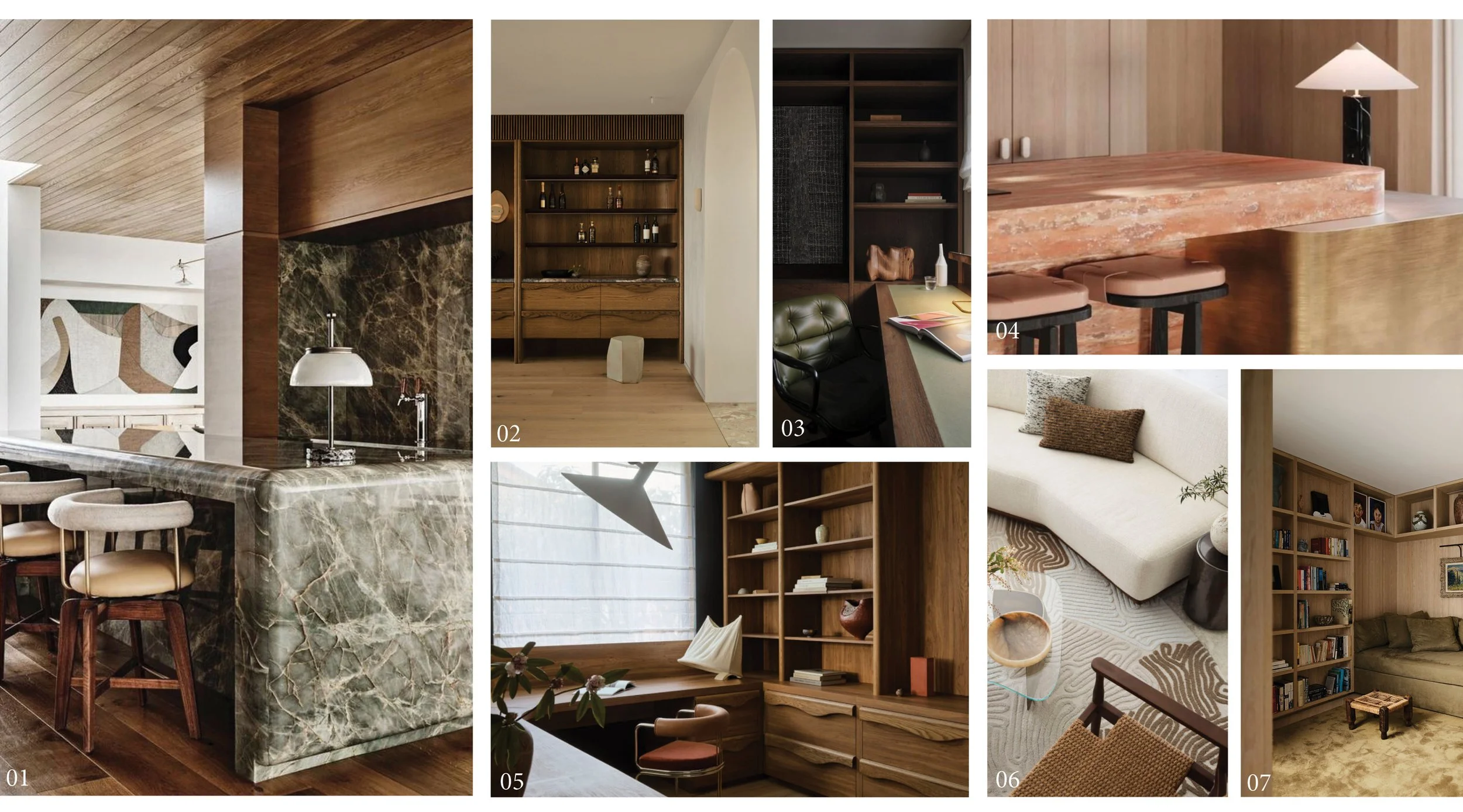
PREVIEW: EARLY CONCEPTS TAKING SHAPE - RESIDENTIAL INTERIOR DESIGN AND DECORATION
What to Bring to Your First Consultation
You do not need to arrive with everything resolved. A first meeting is a conversation, not an exam. That said, a few things help us move quickly. Bring mood images or a saved folder of rooms you respond to. Bring plans or sketches if you have them. Bring notes on what works and what frustrates you in your current home, along with any favourite materials, finishes or colours. Even a single image you keep returning to tells us something useful.
How Kaiko Design Interprets Your Brief
Reading a brief well takes both intuition and precision. Our role is to listen for what sits beneath the words, then translate it into something buildable. We're not copying a look, we're translating a mood. From your brief we distil a clear scope, a set of priorities and a tonal direction, and that becomes the spine of everything that follows, from concept through detailed documentation to final styling. This is the heart of the Kaiko Design approach, and it is why our residential interior design feels personal rather than templated. Turning intent into a documented plan is also what keeps a project on track. Considered interior design project management begins the moment the brief is understood.
Why This Step Builds Trust
Every good partnership rests on being understood. When a client feels heard at the briefing stage, the whole relationship changes. Decisions come faster. Trust replaces second-guessing. The brief isn't paperwork, it's connection, set down in a form both sides can return to. It is the clearest early sign of what working with an interior designer should feel like: collaborative, considered and genuinely yours.
Starting the Conversation
If you are planning a full renovation or a new build and want the process handled properly, a first conversation is the natural place to begin. We offer an initial consultation to talk through your project, your brief and how we might work together. When you are ready, send the studio an enquiry and we will take it from there.