Colour in Interior Design: The Kaiko Design Approach
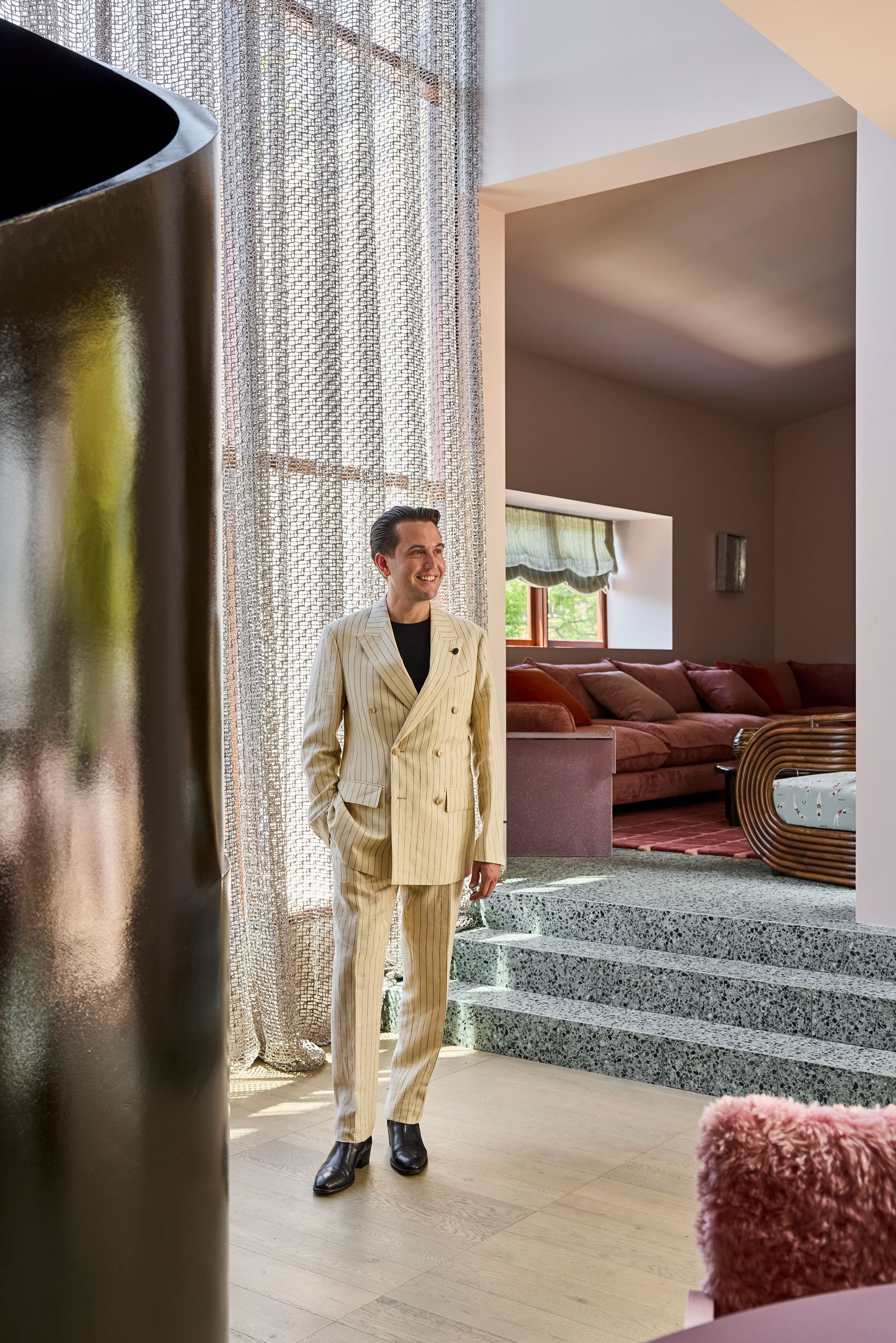
Kaiko Design Interiors - Principal Nic Kaiko
Most people approach colour as the last decision in a renovation. The joinery is ordered, the tiles are laid, the furniture is arriving, and then someone reaches for the paint chart. It feels logical: you can only really see how a colour will read once everything else is in place. In practice, it is the most common reason a finished home fails to feel right, even when every individual decision was good.
At Kaiko Design, colour is resolved early. Not early as in "we pick a palette before the detail design," but early as in conceptually: colour is treated as a structural element in the same way that spatial planning and material selection are structural elements. It shapes how a home feels to move through, how rooms relate to each other, how light is used, and how the people who live there register their own character in the space. Working with an interior designer Sydney clients trust with full-service projects means working with someone who treats colour as that kind of decision, not an afterthought applied once the building work is done.
Colour is an atmospheric decision, not a decorating one
There is a version of colour advice that is everywhere: blue for bedrooms, yellow for kitchens, green for calm, red for energy. These associations are not wrong, exactly, but they flatten something genuinely complex into a selection problem. You pick a colour from a list of what it means, apply it, and expect the room to deliver the emotion. That is not how colour actually works.
Colour in a room is not a single thing. It is a conversation between every surface: the painted walls, the floor material, the ceiling tone, the textiles, the joinery, the art, and the quality of light coming in from outside. A room is not the colour on its walls. It is the cumulative atmosphere produced by all of those elements in relationship. A deep green wall in a room with dark timber floors, linen curtains, and indirect north light feels entirely different from the same green in a room with white joinery, concrete floors, and direct afternoon sun. Both are technically the same colour. Neither feels the same.
This is why a colour chosen from a paint chart in a showroom almost always disappoints on the wall. The showroom lighting is different, the context is different, and the colour on the chip is not the colour in your specific room at your specific time of day.
Why Sydney's light changes everything
Almost all published colour advice is calibrated to Northern Hemisphere light. British and Scandinavian design guidance, which dominates the English-language internet, assumes a cool, diffuse, relatively low-contrast light quality. Sydney light is none of those things. It is warmer, more saturated, and dramatically more directional. The shift from morning to afternoon on a Sydney wall can change a colour more significantly than changing the colour itself would.
A warm white that reads as buttery and inviting in a London kitchen reads as flat and slightly yellow in a north-facing Sydney room at midday. A deep sage that feels grounding in a Scandinavian interior can read as olive and heavy in an east-facing Sydney space by afternoon. When we work on heritage home renovations in Sydney's established suburbs, the quality and angle of light through period windows, often filtered through established tree canopy, is one of the first things we assess before any colour conversation begins.
Understanding Sydney's specific light conditions is foundational. It is why a colour needs to be tested in situ, across different times of day and different seasons, before it is committed to. And it is why the paint fan deck is always the last reference point, not the first.
Saturation is the variable most homeowners misunderstand
When people talk about choosing a colour, they almost always talk about hue. Green, blue, terracotta, white. But saturation, how much of the pure colour is present, is often the more consequential decision. The difference between a green that makes a room sing and a green that makes it feel oppressive is rarely a different green. It is a different level of saturation.
Highly saturated colours carry enormous presence. Used well, a deeply saturated wall is one of the most powerful tools in residential design. Used carelessly, it competes with every other element in the room and produces a space that exhausts rather than enlivens. At Kaiko Design our colour-led approach is not about saturated colour for its own sake. It is about saturation used at the right level, in the right context, in proportion to what the room's other materials and its light can support. A room with significant natural daylight and strong material texture can sustain a more saturated palette than a deep-plan apartment where light is already working hard. Getting saturation right is usually the difference between a colour decision that looks considered and one that looks brave but uncomfortable.
The relationship between colour, material and surface
Paint sits flat on a plane and reflects light uniformly. Stone absorbs light into its depth and shifts colour across the day as the angle of light changes. Timber carries its own colour and moves between warm and cool depending on species, cut, and finish. Plaster, particularly lime-based or hand-troweled plaster, holds colour differently again, with a texture that softens and distributes rather than reflects. These are not interchangeable. A colour decision made for a painted wall needs to account for what is happening on every other surface in the room.
This is particularly true in the kind of residential interior design Sydney projects Kaiko Design typically works on, houses and apartments with real material richness, joinery, stone, plaster, natural textiles, where the colour exists in a complex material environment rather than a blank container. The goal is not to match everything to a single dominant colour but to ensure that all of the materials in a room are in a coherent conversation. A honed limestone floor carries cool grey undertones. The joinery stain pulls warm. The wall colour has to bridge those two rather than fight either. That calibration is where genuine colour expertise lives.
Colour works across the whole home, not room by room
Most colour decisions are made room by room. This room is the green room, that room is the blue room. It produces homes that feel like a series of separate decisions rather than one considered whole. Colour should move through a home with a logic: not identically repeated, but with enough tonal and character continuity that moving from room to room feels like travelling through the same place rather than arriving somewhere new.
In the Chippendale Terrace project, the building's tight terrace floor plan meant that rooms were visible to each other at almost every point. A colour decision in the kitchen had a direct relationship to the living room, which related to the hallway, which carried through to the staircase. Each space had its own character, but the palette maintained continuity through the movement of a consistent warm undertone, expressed differently in each room through different saturations and material combinations. The result was a home that felt generous and considered at every point of arrival.
That kind of thinking, colour as a system rather than a series of individual decisions, is part of what the design process at Kaiko Design is built around. Colour is resolved at the concept stage because it cannot be resolved properly any other way.
How Kaiko Design applies colour in practice
Dynamic eclecticism, the philosophy at the centre of Kaiko Design's residential work, is sometimes described as colour-led. That framing needs a little unpacking, because colour-led does not mean saturated, or bold, or unconventional. It means that colour is the mechanism through which a home's atmosphere and personality are expressed, and that the specific palette emerges from three inputs in genuine conversation with each other.
The first is the building: its orientation, its architecture, the quality and character of the light it receives, its period and material heritage. A Federation home in Killara reads its light very differently from a Double Bay apartment facing the harbour, and the colour approach has to begin from those conditions rather than from a preferred palette.
The second is the materials: how the selected finishes, joinery, stone, fabric, and floor treatments carry and reflect colour, and how the palette needs to be calibrated to work with those materials rather than against them. The real work of colour in a considered interior is often invisible, a warm bias in a wall tone that lifts a cool stone floor, a saturation level that lets a richly grained timber read as the hero rather than compete with the walls.
The third, and arguably the most important, is the client. Colour in a home is not abstract. It is how the people who live there experience their own character in the space around them. The studio's approach to colour begins with understanding how a client actually lives, what they respond to emotionally, what they remember, what they want to feel at seven in the morning and at ten at night. A palette that has not begun from that conversation is a palette that could belong to anyone. At Kaiko Design, the goal is always a colour scheme that could only ever belong to the person whose home it is.
If you are planning a renovation or new build and want to understand what a colour-led approach looks like in practice, get in touch for a discovery call. And if you are thinking through what a full-service engagement might involve, our interior design cost guide and pricing page are the right starting points.