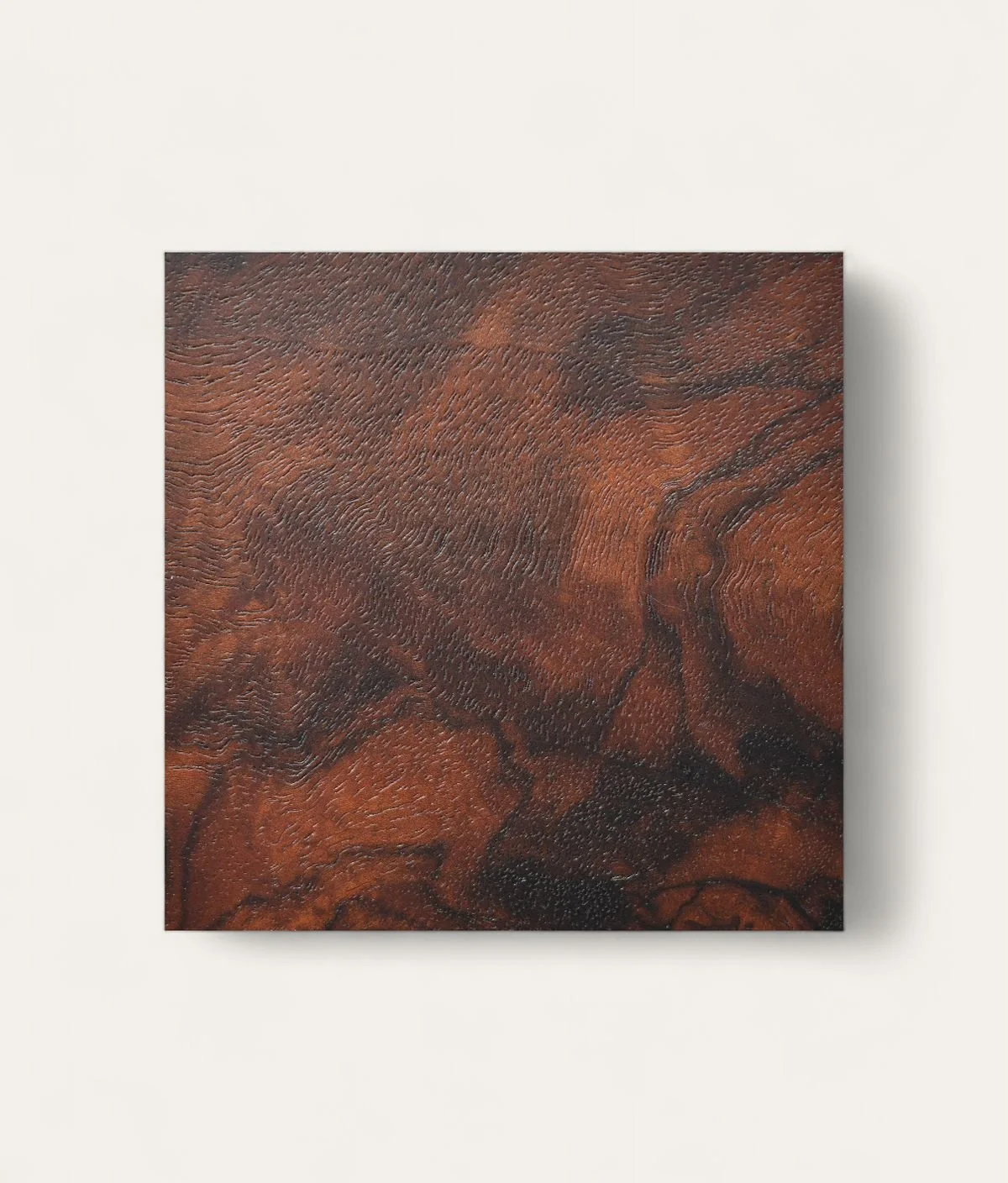
Burr walnut, birdseye maple, quilted sycamore. Figured woods have a way of stopping a room. Their surfaces seem to move as you pass, catching light where a plain timber would sit flat. This is not a look that arrives and fades. Figured timber has been prized by cabinetmakers for centuries, and it remains one of the most quietly luxurious materials available to a residential interior. At Kaiko Design, we specify it where a piece deserves genuine character rather than surface decoration.
Understanding Figuring
It helps to separate two ideas that are often confused. Grain describes the direction and arrangement of the wood fibres, the lines that run along the length of a board. Figuring is something else. It refers to the distinctive patterns that appear across the surface, the swirls, ripples and eyes that lift a piece of timber beyond the ordinary.
What makes figuring so striking is the way it handles light. A figured surface has a three-dimensional quality. It appears to shift and shimmer as you move around it, because the fibres sit at changing angles and reflect light in different directions. A flat photograph rarely does it justice. The effect only reveals itself in the room, under real light, across the course of a day.
What Causes Figuring
Figuring has several origins, and often more than one is at work in a single board.
The most common cause is natural deviation in the grain. Where fibres grow at a tangent or wave rather than running straight, the surface develops a rippling pattern. Stress plays a part too. A tree that has grown around an obstacle, survived injury or weathered difficult conditions often lays down irregular grain in response. Burls, the rounded growths that form on trunks and branches, produce some of the most dramatic figure of all. Disease and abnormal growth can create distinctive marking. Dormant buds that never developed into branches leave clusters of small eyes in the timber.
The cut matters as much as the cause. The same log can look plain or spectacular depending on how it is sawn. Quarter-sawing and flat-sawing reveal figure differently, and a skilled miller reads the log to bring out its best face. Figure that would be lost in one cut becomes the whole point of the piece in another.
Types of Figured Wood
Figured timber is usually grouped by the pattern it shows. Each type has its own character, its own favoured species, and its own natural home in furniture and joinery.
Burr
Burr is the figure taken from burls, and it is among the most sought after. The pattern is a dense swirl of curled, rounded grain, scattered with dark spots where dormant knots cluster together. The tones tend to run warm, from medium orange-brown to deep chocolate. Burr walnut is the classic, a mid-century favourite that still feels current in a well-considered scheme. It suits statement veneers, tabletops and cabinet fronts where a small area of extraordinary material can carry a whole piece.
Birdseye
Birdseye is named for exactly what it looks like: a scattering of tiny rounded eyes across an otherwise pale surface. It is most closely associated with hard maple, where small conical dips in the growth rings create the pattern. The effect is delicate and busy at close range, and it reads beautifully in smaller applications, drawer fronts, panelling and feature detailing where the eye can take it in.
Quilted
Quilted figure has a soft, billowing appearance, like rumpled fabric or a draped quilt caught mid-fold. It is most pronounced on the flat-sawn face and is found most often in maple, though sapele and mahogany can carry it too. Quilting has real depth, and on a larger surface such as a wardrobe door or a feature panel it produces a sense of movement that plain timber cannot match.
Pommele
Pommele takes its name from the French for dappled, and the pattern reads like a surface of small, tightly packed puddles. It appears most often in African hardwoods such as sapele, makore and bubinga. Because the figure covers the whole surface evenly, pommele is well suited to large veneered areas, feature walls and cabinetry where a consistent, luxurious texture is wanted.
Mottled
Mottled figure is broken and irregular, a dappled play of light and dark that shimmers across the grain rather than following a set pattern. It occurs in a range of species, sapele and makore among them. The uneven quality gives it a lively, characterful surface that works well in panelling and veneer work where a little irregularity adds warmth.
Flame
Flame figure, also called tiger or fiddleback, shows as parallel bands running across the grain, rippling like flames or the stripes of a tiger as the light moves over them. The fiddleback name comes from its traditional use on the backs of violins. It appears in maple, sycamore and other species, and it lends itself to furniture legs, drawer fronts and feature veneers where the striped shimmer can be shown off.
Why Figured Wood Endures
Figured timber is not a passing look. It has been valued by makers for as long as fine furniture has existed, precisely because it is rare, natural and impossible to fake convincingly. Every piece is unique, formed by the particular life of a single tree. That individuality is what keeps it timeless. A well-chosen figured surface will still feel considered and personal decades on. It also sits comfortably alongside warm, earthy materials and layered colour, which is why it belongs in rich, tactile interiors. It is equally at home in rustic timber interiors and in the disciplined use of natural wood in interiors that a pared-back, Scandinavian sensibility calls for.
Figured Wood in a Kaiko Interior
At Kaiko Design, a Sydney interior design studio, figured timber is a material we return to often, because it does so much with restraint. A single burr veneer on a joinery front, a flame-figured drawer, a quilted panel behind a bed. These are small moves that give a room genuine depth without shouting. Our approach to bespoke residential interior design treats joinery and furniture as opportunities for material character rather than afterthoughts. We specify figure where it earns its place, balance it against calmer surfaces, and set it within warm, colour-led schemes so it reads as part of a whole.
Where provenance matters, we work through sustainable material sourcing so a beautiful timber also carries a clear conscience. This is detailed, considered work, and we cost it transparently through fixed-fee pricing so there are no surprises along the way. If you are planning a renovation or new build and want timber and joinery handled with real care, we would be glad to talk to the studio about your project.