Blending Industrial and Rustic Interiors
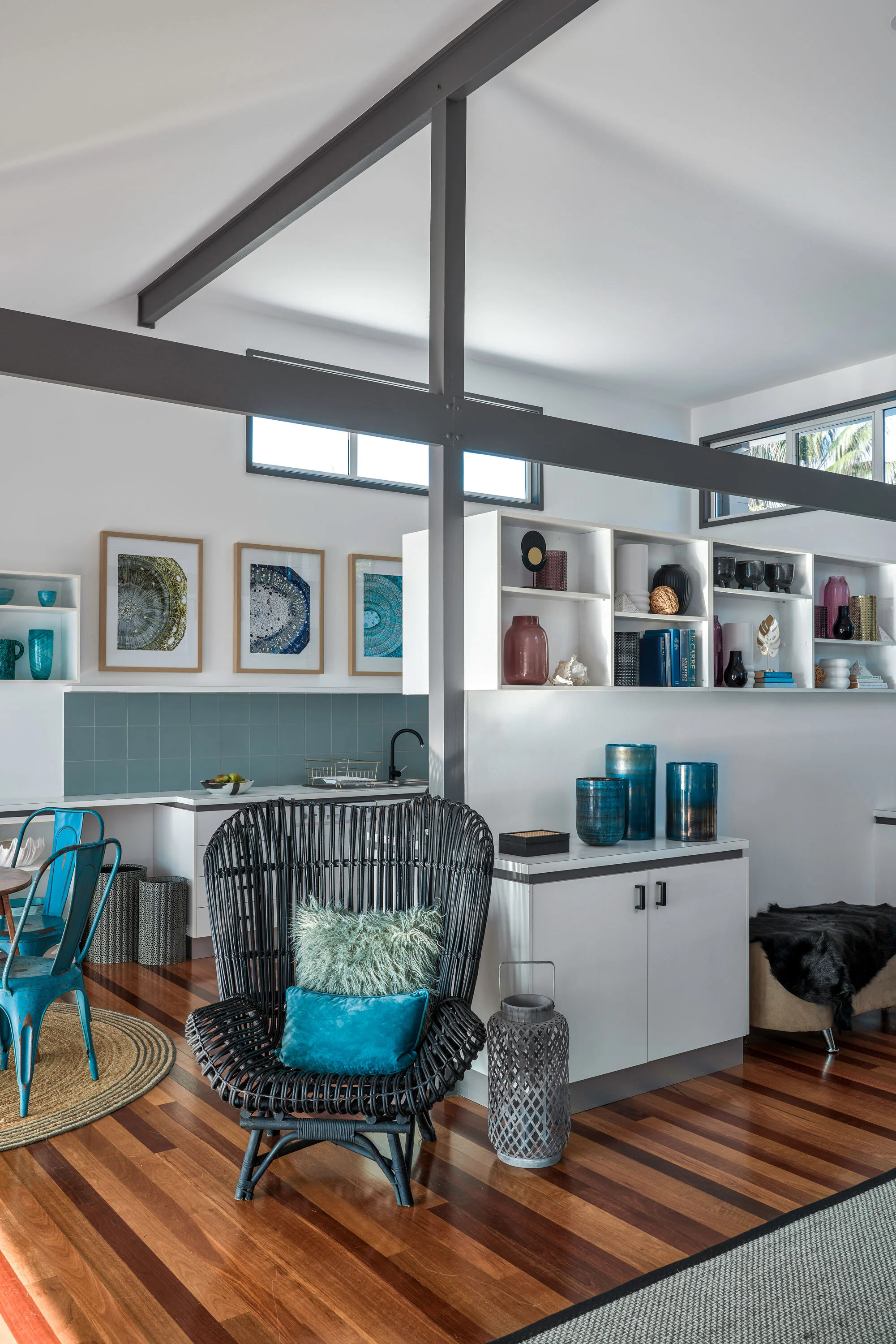
Kaiko Design Interiors - Port Stephens House II
Industrial and rustic sit at opposite ends of a spectrum. One is hard, engineered and urban. The other is soft, handmade and grounded in the land. Put them in the same room without thought and they argue. Blend them with intent and they become one of the most satisfying combinations in residential interiors: rugged enough to feel honest, warm enough to feel like home.
At Kaiko Design, a Sydney interior design studio, this kind of confident style-blending is the work itself. Resolving two distinct influences into a single, coherent scheme is what the studio calls dynamic eclecticism. It is a designer's craft, not a mood board exercise. This guide sets out how the two styles work, how to hold them in balance, and where the blend usually goes wrong.
The Foundations of Industrial and Rustic Design
Before combining two styles, understand each on its own terms.
Industrial design takes its cues from warehouses and factories. Exposed steel and timber, machinery-inspired fixtures, and a raw, unfinished quality define it. Palettes stay neutral and often cool: greys, blacks, the dull sheen of metal. Spaces tend to be open, structural elements are left visible rather than hidden, and there is a deliberate honesty to the materials. Nothing pretends to be something it is not.
Rustic design comes from the opposite direction. It is built on natural materials: stone, timber, clay and linen. Furniture is handcrafted or vintage, often bearing the marks of age and use. The palette is earthy and warm, the textures tactile, and the overall feeling is one of comfort and homeliness. Where industrial is engineered, rustic is grown.
The reason the two work together is that they share a respect for material truth. Both favour the real over the polished. That common ground is what a considered scheme builds on.
Striking the Balance Between Rugged and Warm
The blend succeeds or fails on balance. Get the proportions right and the room reads as intentional. Get them wrong and it reads as indecision.
Start with a neutral base. Greys, whites, warm browns and soft blacks give both styles room to breathe and stop either one from shouting. This foundation carries the walls, the larger furniture and the flooring, leaving the character pieces to do their work against a calm backdrop.
Introduce natural materials against the metal. A steel-framed shelf gains warmth from timber boards. A concrete benchtop softens beside a reclaimed oak island. The interplay between cold and warm, hard and soft, is the entire point, so let the two materials sit in genuine conversation rather than in separate zones.
Blend textures deliberately. Pair leather with metal, rough-sawn timber with brushed steel, woven linen with exposed brick. Texture is what stops a neutral palette from feeling flat, and it is where much of the richness in a blended scheme lives.
Lighting bridges the two moods. Vintage and machinery-inspired fixtures suit the industrial side, but hard light alone leaves a room feeling stark. Soften it with warm ambient layers: table lamps, wall lights, a dimmable source at a low level. The fittings can be rugged. The light they cast should be inviting.
This is the same discipline behind any good eclectic design harmony, where disparate elements are held in a considered balance rather than left to compete.
Repurposing and Reclaimed Materials
Reclaimed materials are where industrial and rustic meet most naturally. Both styles value history and the honest wear of a used object.
Timber salvaged from an old structure carries a patina no new board can replicate. A length of steel piping becomes open shelving. Weathered crates become side tables. Scaffold boards become a mantel. These are not budget compromises. They are the clearest expression of what both styles are about: material with a past, put to considered new use.
The same instinct extends to earthy, tactile finishes across the room. Terracotta accents, for example, bring a warmth and handmade quality that ties the rustic side to the whole scheme, and they read beautifully against raw metal and concrete.
The Mistakes That Break the Blend
Most failed industrial-rustic rooms fail for the same handful of reasons.
Letting one style dominate. When industrial takes over, the room turns cold and hard. When rustic takes over, the edge and structure disappear. The blend needs both voices at a deliberate ratio, not an accidental one.
Choosing pieces without cohesion. A room assembled from individually appealing items rarely holds together. Every piece should earn its place in relation to the others, not just on its own merit.
Ignoring function. A scheme that looks right but does not work is a failure of design, not a triumph of style. Comfort, circulation and everyday use come first.
Neglecting scale and proportion. Industrial pieces are often large and heavy. Rustic pieces vary widely. Without attention to how they sit together in the space, even good individual choices can feel awkward and unbalanced.
This is where whole-home coherence matters, and where residential interior design as a discipline earns its keep. Holding a blended scheme together across every room, not just one feature wall, is what separates a designed home from a decorated one.
The Finishing Layer
The final layer is what makes a blended scheme feel resolved rather than themed.
Accessorise with intent. Objects can harmonise with the palette or contrast deliberately against it, but each should be a decision. A single considered piece does more than a shelf of filler.
Bring in greenery. Plants warm the coolness of industrial materials and reinforce the natural language of the rustic side. A large potted olive or fig against a raw brick wall does a great deal of quiet work.
Pair materials with confidence. Leather with metal, timber with steel, linen with concrete. These pairings are the vocabulary of the style, and used well they give the room its depth.
Consider window treatments. Bare industrial windows can feel severe. Simple linen or timber-toned dressings soften the edges without erasing the architecture.
Keep the result feeling current and considered. The aim is a room that looks composed rather than assembled from a single trend.
Where Genuine Inspiration Comes From
The best reference is rarely a trend feed. It is a designer's eye trained on how materials behave and how a room is actually used.
Historical and cultural influences run deep in both styles. Industrial design carries the honesty of early manufacturing architecture. Rustic design carries centuries of vernacular building in stone and timber. Understanding where each comes from makes the blend more convincing, because the choices are grounded in something real. There is a related lesson in fusing design aesthetics from different traditions, where the same principles of respect and restraint apply.
The studio's own portfolio is the other honest reference. Seeing how a blend has been resolved in a real home, across real constraints, teaches more than any single image can. Material choices such as figured wood furniture show how much character a considered timber selection brings to a rugged scheme.
Making an Eclectic Scheme Cohere
Blending industrial and rustic well is not about following a formula. It is about judgement: knowing when a room needs more warmth or more edge, when a material is fighting rather than complementing, when to stop.
At Kaiko Design, this is the craft the studio brings to every project. Dynamic eclecticism means resolving disparate influences into one personalised, coherent interior that feels like the people who live in it. The studio works to fixed-fee pricing, so the scope is clear from the outset and the focus stays on getting the design right.
If you are planning a renovation or new build and want a blended scheme handled properly across the whole home, talk to the studio about your project.