What Luxury Interior Design in Sydney Actually Means
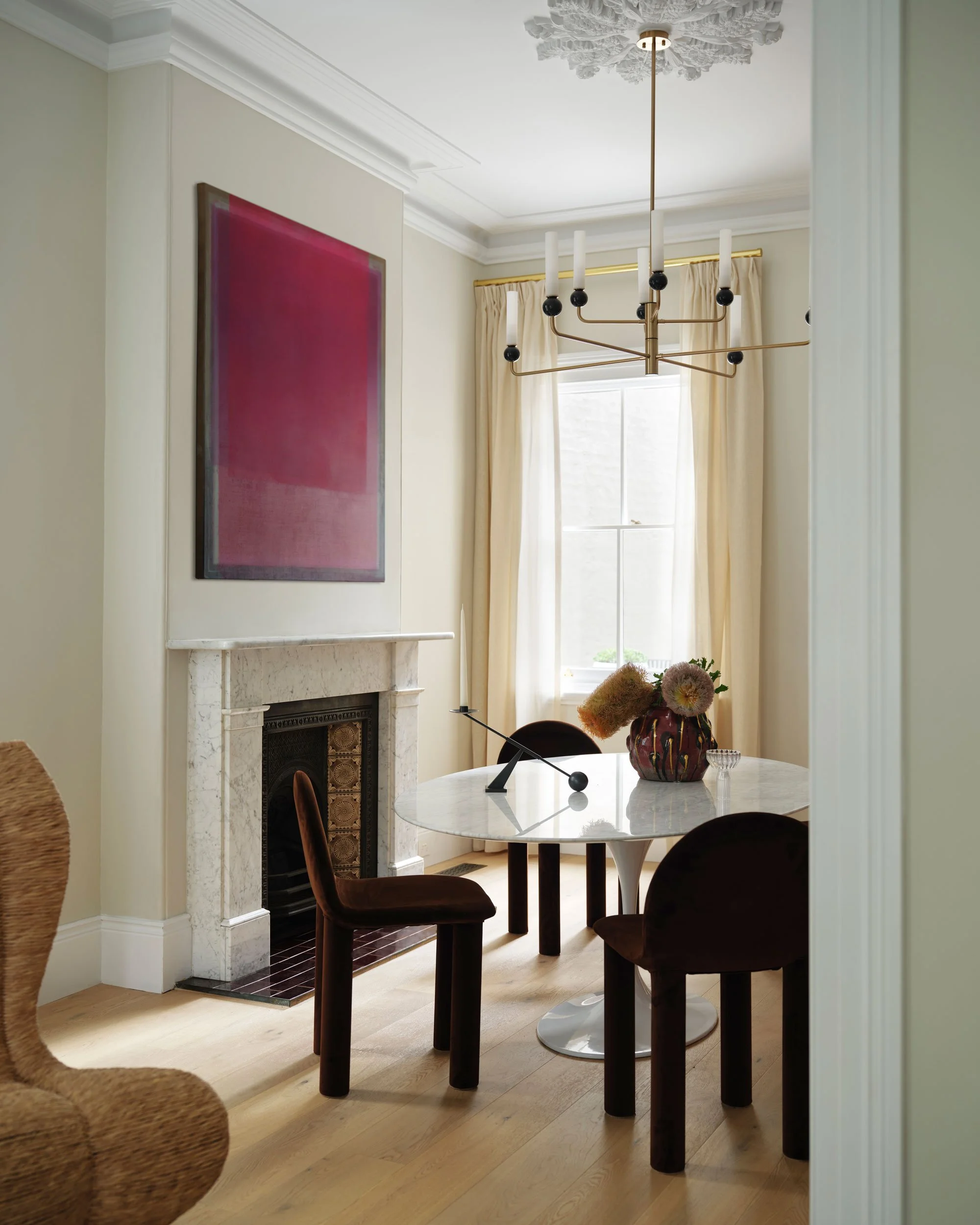
KAIKO DESIGN INTERIORS - CHIPPENDALE TERRACE HOUSE, LUCURY INTERIOR DESIGN
The word gets misused constantly. Luxury interior design in Sydney — in the minds of many clients coming to a first consultation — means expensive furniture, imported stone, and a price tag that signals ambition. That framing isn't entirely wrong. But it is incomplete. And the gap between expensive and refined is exactly where most high-budget interiors fall short.
At Kaiko Design, we've worked on residential projects and luxury hospitality environments across multiple continents. That experience has sharpened a very clear view of what luxury actually requires — and what it has nothing to do with.
Expensive Is Not the Same as Refined
A kitchen fitted with marble benchtops, Gaggenau appliances, and custom cabinetry can still feel wrong. The proportions might be off. The finishes might not speak to each other. The lighting might flatten every surface it was meant to highlight.
Luxury is not a product specification. It is a result of decisions made with precision at every layer of a project — spatial, material, tonal, tactile. The budget enables it. The skill executes it.
This distinction matters because it reframes what a client is actually buying when they engage a luxury interior designer in Sydney. They are not buying access to a supplier catalogue. They are buying the judgment to use that catalogue correctly.
What Hospitality Design Taught Us About Residential
Nicholas Kaiko's background spans international hotel interior design alongside high-end residential work in Sydney. That dual experience is not incidental to the studio's approach — it is foundational to it.
Luxury hospitality has a rigour that residential design rarely matches. In a five-star hotel, every element is stress-tested against how guests will actually experience it. Nothing is speculative. Material choices are interrogated for durability, light response, tactile quality, and visual behaviour at different times of day. Spatial layouts are tested for flow under real use conditions. The design team cannot rely on a client's tolerance for compromise — there is none.
At Kaiko Design, we apply that same standard to residential interior design in Sydney. Every decision is accountable. Not just to the brief — to the lived experience of the finished space.
Material Quality Is Not What You Think It Is
Most people assume luxury materials means the most expensive materials. The reality is more nuanced.
The right material for a space is the one that performs — visually, structurally, and sensorialy — in that specific context. Travertine in a room with weak natural light can look flat and heavy. Venetian plaster in the wrong climate will telegraph every movement in a wall. A furniture fabric that photographs beautifully may feel coarse to the touch and pill within a season.
At the luxury end of hospitality interior design, the specification process is methodical. Materials are sampled in situ, reviewed across lighting conditions, assessed against adjacent elements, and sourced at trade level — not retail. Our procurement and trade access allows us to work with makers and suppliers who simply aren't available through retail channels. That access is part of what you're paying for.
It is also part of what separates a considered interior from one that reads as expensive without reading as intentional. The craft of mixing materials and finishes — knowing which surfaces should contrast and which should recede, which textures anchor a room and which animate it — is a technical skill, not an aesthetic preference.
Restraint Is a Luxury Signal
There is a tendency, when budget is generous, to fill space. More pieces, more layers, more gesture. The result is often the opposite of what was intended — a room that reads as effortful rather than effortless.
The interiors that feel truly luxurious are almost always the ones where something has been held back. Where a material has been used once and allowed to land. Where a colour decision has been made and committed to, rather than hedged with neutralising tones throughout. Where a lighting plan has been designed to create atmosphere rather than just illuminate.
Restraint is not minimalism. This is a common conflation. A space can be rich in colour, layered in texture, and dense with considered objects — and still demonstrate restraint. What it cannot do is contain unnecessary decisions. Every element present must earn its place.
This is the heart of the design concept process at Kaiko Design. Before anything is specified, the brief is interrogated until the governing idea of the project is clear. Every subsequent decision is made against that idea. Restraint is not a stylistic choice — it is a discipline that runs through the whole process.
Detail at Every Scale
Luxury design operates at multiple scales simultaneously. The architecture of a room — its proportions, its relationship to natural light, the weight of its spatial transitions — sets the foundation. Above that, the specification layer: the finishes, the furniture, the textiles and surfaces. Above that, the fine detail layer: the profile of a joinery edge, the shadow gap between materials, the placement of a single object on a shelf.
Each layer must be resolved. A beautifully specified room with clumsy joinery detailing will not feel luxurious. Spa-inspired bathrooms — one of the spaces where clients most commonly want a luxury outcome — succeed or fail almost entirely at the detail scale. The waterproofing junction. The towel rail position relative to the shower. The grout joint width and colour. These are not afterthoughts. In a luxury project, they are primary decisions.
What This Means If You Are Looking for a Luxury Interior Designer in Sydney
The right studio is not the one with the most expensive portfolio imagery. It is the one whose work holds up on closer inspection — whose decisions are defensible, whose spaces function as well as they photograph, and whose approach to your project starts from a genuine understanding of how you want to live.
Understanding the interior design investment involved in a project at this level is an important early step. Transparency about fees and process is part of what distinguishes a studio worth working with.
At Kaiko Design, we work with clients who are not browsing. They have a project, they have a vision, and they want a studio with the experience and rigour to realise it correctly. Our background in international hospitality design gives us a standard that we apply consistently — whether the project is a full home transformation or a single signature space.
If that sounds like the right fit, we'd welcome a conversation. Get in touch to book a discovery call and talk through your project.