Victorian Interior Design Sydney: How to Renovate a Terrace Without Losing Its Soul
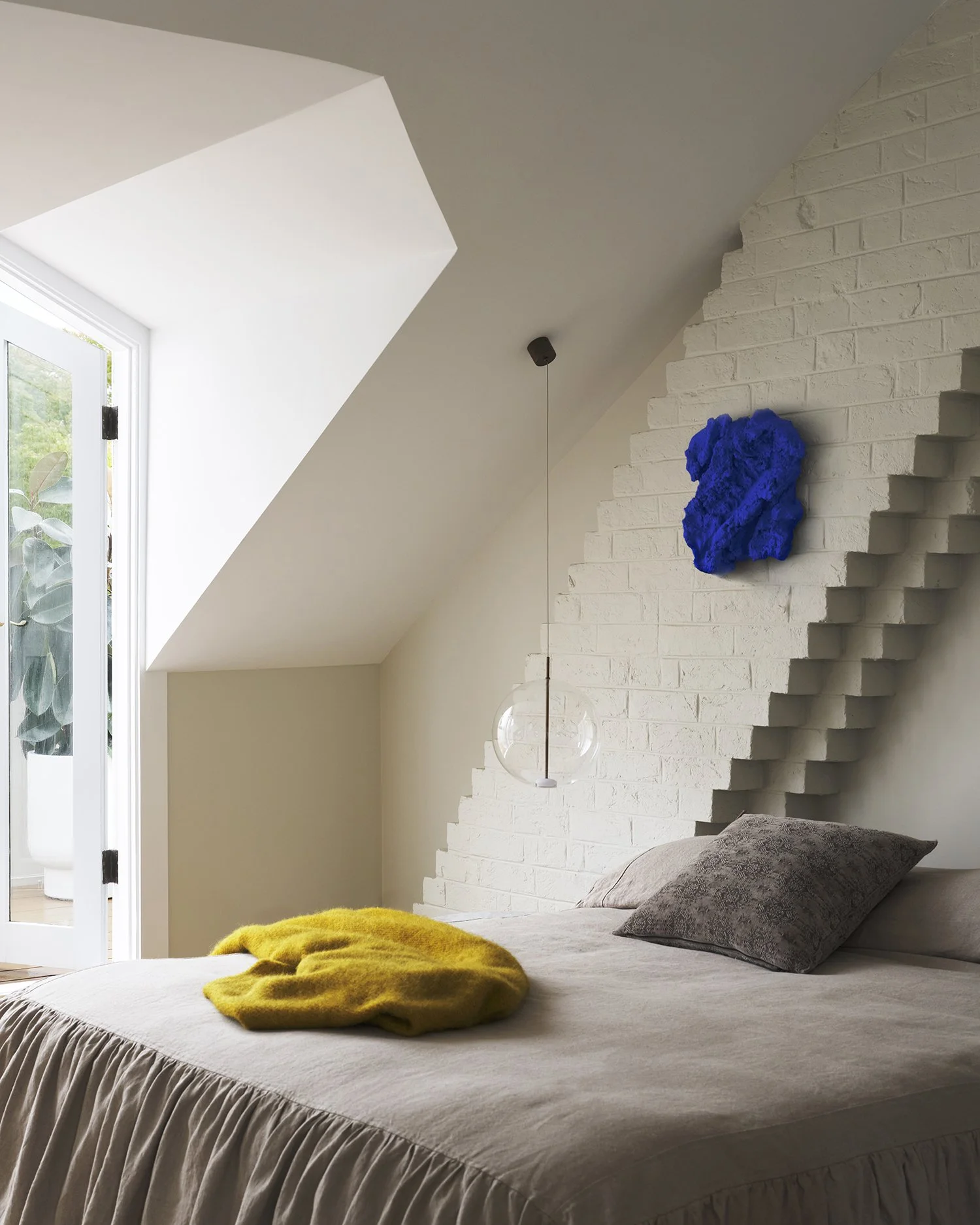
KAIKO DESIGN INTERIORS - CHIPPENDALE TERRACE HOUSE. ATTIC CONVERSION
Sydney is a Victorian city. Walk through Paddington, Surry Hills, Glebe, Newtown, or Balmain and the streetscapes say it plainly — row upon row of narrow terrace homes, built between roughly 1860 and 1900, have defined inner-city Sydney for over a century. They are one of the most common housing typologies in the country, and among the most misunderstood renovation briefs.
Victorian interior design in Sydney is not a style choice. It is a site condition. These homes arrive with fixed constraints and embedded character, and the way a designer navigates the tension between the two determines whether the result is a home worth living in — or simply an expensive mistake. At Kaiko Design, we have worked extensively with this building type across Sydney's inner suburbs, and this guide sets out exactly how we approach it.
Why a Victorian terrace is a distinct design brief
Not all period homes present the same brief. Victorian terraces in particular share a consistent set of spatial challenges that have almost nothing to do with aesthetic preference and everything to do with how they were built.
The typical terrace is narrow-fronted — often as little as four to five metres wide — and very deep. The original plan stacked rooms off a single central corridor: a formal parlour at the front, bedrooms behind, with the kitchen and outhouse pushed to the rear or a detached outbuilding. Natural light entered only from the front facade and the rear yard. The middle of the house was dark.
Today's occupants want open-plan living, modern kitchens, adequate bathrooms, and natural light throughout. None of these requirements map easily onto a Victorian floor plan. That is the brief. And it is the same brief on every terrace, regardless of suburb.
The opportunity is equally consistent. These homes have original heritage details that no contemporary build can replicate economically: ornate plaster cornices, pressed-metal ceilings, ceiling roses, cast-iron fireplaces with original surrounds, tessellated tile entry paths, timber-framed double-hung windows, and in the best examples, decorative iron lacework on the verandah. These elements are not problems to work around. They are the assets — provided you know how to use them.
Understanding historical design styles influencing modern interiors is foundational to working with this typology well. Victorian architecture drew from pattern books and applied decoration with deliberate intent. The results were not accidents. Respecting that logic does not mean reproducing it. It means understanding it well enough to respond to it. For homes where the heritage fabric extends beyond the terrace typology, our guide to modern heritage interiors in Sydney covers the broader approach.
Heritage overlays in Sydney: what they mean for your renovation
Most Victorian terraces in Sydney's inner suburbs fall within a Heritage Conservation Area (HCA), are individually heritage-listed, or both. This is not a minor planning footnote. It has a direct and material impact on what you can and cannot do.
The City of Sydney Council guidelines require conservation of significant original features, internally and externally, for individually listed terraces. For terraces within a conservation area, the external form is considered important. In practical terms, this almost always means the street facade is untouchable — the original proportions, ironwork, render, and fenestration must be retained. For areas subject to heritage conservation controls, council will typically want to retain consistency of the street facade, which restricts the majority of improvements to the rear of the property.
This is not a reason for despair. It is a reason to concentrate the renovation energy where it will have the most impact: the rear extension, the central living zone, and the interior finish throughout.
Before any design work begins, confirm your property's heritage status. Check the NSW Heritage Database and your local council's planning portal. If your home is individually listed, you will need a heritage impact statement as part of your DA. If it sits within a conservation area, controls still apply to external alterations. If you are unsure of your property's status, you can check the NSW heritage database through the NSW Office of Environment and Heritage, or confirm directly with your local council. Some Inner West and Eastern Suburbs terraces also carry shared-infrastructure considerations — common sewer lines, party walls, and roof structures that require investigation before structural work proceeds.
The rules are firm. The most expensive mistake in a terrace renovation is assuming they are not.
Working with period details, not against them
There are two approaches we see consistently across Victorian terrace renovations in Sydney — and one of them routinely produces homes that feel hollow.
The first approach strips out every original detail in the name of modernisation. Cornices, ceiling roses, architraves, and skirtings are removed. Fireplaces are capped. The resulting interior is a series of plain boxes that happen to sit behind a heritage facade. Character is replaced with neutrality.
The second approach retains, restores, and extends the logic of the original detailing into the contemporary zones of the home. This is the approach at Kaiko Design.
Original plaster cornices should be repaired, not removed. Where they are damaged beyond remediation, commission skilled plasterers to replicate the profile — the scale and proportion matter. Ceiling roses, where they survive, are worth restoring regardless of whether you intend to hang a pendant from them; they anchor the room's proportions. Timber-framed windows should be retained where possible; their weight, shadow depth, and material quality read entirely differently to modern aluminium equivalents.
Fireplaces are perhaps the most contested element. In rooms that transition to new uses — an open-plan living space, a study, a third bedroom — the fireplace surround remains a significant compositional anchor. A retained fireplace with a sealed flue is not a limitation. It is a focal point, and often the piece that makes the room.
Terrace house design lives or dies on how well the designer handles the meeting point between original fabric and new intervention. The front rooms of a Victorian terrace carry the strongest heritage character — cornices highest, proportions most formal, light quality most considered. These rooms reward restraint and confidence in equal measure.
The transition from original to contemporary
The central corridor of a Victorian terrace is both its greatest constraint and, when handled well, one of its defining design features. It is narrow — typically just over a metre wide — and runs from the front door to the rear of the house. Most renovations cannot widen it without demolishing walls that may be structurally or heritage-significant.
At Kaiko Design, our approach to this transition zone is deliberate rather than apologetic. The corridor should read as a considered sequence of spaces — not simply a passage between zones. Lighting design matters here more than anywhere else in the house: a well-lit hallway with a cohesive material through-line between front and rear transforms the experience of the home entirely.
The meeting point between the heritage portion of the house and the contemporary addition at the rear is where most renovations are won or lost. This threshold should be designed, not assumed. A change in ceiling height, a material shift, a strategic view corridor to the rear garden — these are the devices that articulate old from new without rupturing the spatial sequence.
The principle in combining modern and traditional design elements is not visual similarity. It is proportional and material dialogue. The new work should be clearly identifiable as contemporary while acknowledging the language of what precedes it.
Colour in Victorian interior design
The Victorian aesthetic was emphatically not neutral. The original palette of terrace interiors ran to deep, saturated tones — oxblood reds, forest greens, Prussian blues, warm ochres — applied with considerable confidence across walls, woodwork, and furnishings alike. Decades of later renovation produced a wave of white-on-white interiors that stripped this character entirely.
At Kaiko Design, we bring colour back into Victorian terraces, but in a way that is informed by the quality of light in each specific space.
The front rooms — parlour and formal dining — receive the most direct northern light in a typical Paddington or Surry Hills terrace. These spaces can carry deep, saturated colour well. A strong tone on the walls will read warmly in daylight and dramatically under evening lighting, with the white of restored plaster cornices sharpening the contrast. This is Victorian interior design operating as it was intended.
The middle of the house is a different problem. With limited natural light and often lower ceilings in transition spaces, colour strategy shifts. Here we typically work with warm mid-tones — dusty terracotta, ochre, warm sage — that add depth without further diminishing the sense of light.
The rear addition, where ceiling heights often rise and glazing to the garden increases, can absorb the most contemporary expression. Bold cabinetry in a kitchen extension, a material feature wall, a considered lighting scheme — these elements work well in this zone because the shift to a more open, light-saturated space can carry the contrast.
Colour across a Victorian terrace should build as you move through the house — not flatten. The sequence from the formal front rooms to the open rear living should read as a deliberate progression, not a collection of unrelated decisions.
Materials and finishes
The material palette of a Victorian terrace renovation is anchored by what already exists. Original Baltic pine or Victorian ash floorboards are among the most valuable material assets in the home. Where they survive, restore them. Where they are damaged or missing in new extension areas, consider a complementary contemporary timber rather than a match — the contrast reads as honest rather than imitative.
Original sandstone footings, where exposed during demolition, are worth considering for retention and feature use in the interior. They carry a material warmth and authenticity that no specification can replicate.
In kitchens and bathrooms — the zones most subject to contemporary standards — material selection should still respect the palette logic of the house. Handmade tiles, unlacquered brass fixtures, natural stone benchtops, and joinery in warm-toned timbers or painted finishes with depth all operate more successfully in Victorian terraces than the cooler, harder materials that dominate contemporary new-build interiors. This is a home with inherent warmth. The contemporary intervention should complement it.
Solving the light problem
The rear two-thirds of a Victorian terrace is chronically underlit. This is structural, not accidental — the original plan was designed for a period when the rear of the house was service space, not living space. Fixing it requires intervention at the architectural level, which is why interior design and building work on a Victorian terrace must proceed together rather than sequentially.
Rear extensions are the primary vehicle for introducing light. A single-storey extension with a full-width glazed wall to a courtyard or rear garden, combined with a rooflight or glazed roof section over the adjacent kitchen zone, will fundamentally change the light quality of the central living area.
Skylights and roof windows, where the heritage footprint permits them, can also address light in the middle of the house — the dining room, the second bedroom, the bathroom. These require careful integration to avoid appearing as afterthoughts.
At the interior level, material choices amplify available light rather than absorbing it. Warm whites on walls and ceilings in transitional zones, gloss finishes on joinery where appropriate, and mirrors used as considered design elements rather than spatial tricks all contribute to a brighter result.
For a detailed discussion of how Kaiko Design approaches residential interior design in Sydney, including our project methodology for period homes, the residential page is the place to start.
The rear extension: logic and limits
The rear extension is where the contemporary design ambition of a Victorian terrace renovation is most fully expressed — and where it can most easily go wrong.
Council heritage controls typically permit changes to the rear of a terrace provided the additions do not dominate the existing building mass, do not compromise the streetscape, and maintain adequate separation from the original structure's heritage character. The new work should be identifiably contemporary rather than attempting to mimic Victorian detailing.
In practice, this means restraint at the rear elevation visible from the street, and a considered contemporary language in plan and section. A single-storey extension opening to a rear courtyard is the most common and most successful format. Double-storey rear additions are achievable but require more careful heritage negotiation and architectural attention to mass and setback.
The garden — or courtyard — at the rear is an integral part of the brief. A compact, well-designed outdoor room accessed directly from the kitchen and living area extends the functional footprint of the home significantly. This relationship between interior and exterior, handled well, resolves one of the central liveability challenges of the Victorian terrace typology. Many of these homes sit in Paddington, Surry Hills and surrounding suburbs; our Eastern Suburbs interior design guide covers the area in detail.
What Kaiko Design does differently
As a Sydney interior design studio with direct project experience in Victorian and heritage terraces, our approach to this building type is grounded in a principle that sounds obvious but is rarely followed: the renovation should make the house more itself, not less.
That means treating original detailing as a design resource, not an inconvenience. It means bringing colour, material, and light to bear in a way that honours the character of the typology. And it means navigating the contemporary requirements — open-plan living, modern kitchens, adequate natural light — in a way that adds to the heritage quality of the home rather than competing with it.
This is the tension in every Victorian terrace renovation brief. The best results we have delivered emerge from sitting with that tension rather than resolving it too quickly in either direction.
Our work on the classic Sydney terrace house explores this building type in detail. And the Victorian design elements that define this aesthetic remain as relevant now as they were when these homes were built — provided they are handled with expertise rather than sentiment.
If you own a Victorian terrace and are planning a renovation, the design decisions made at the beginning of the process determine the result. Getting that foundation right is the work. Book a discovery call with Kaiko Design to discuss your brief, your site, and what a rigorous, colour-led approach to Victorian interior design in Sydney looks like in practice.
For questions about interior design fees and what to expect from the process, our fixed-fee pricing page lays it out clearly.